|
Be informed! HB2790 is an IL bill
you should be aware of.
Please read the original bill and its 3 amendments
carefully!
Dr. Welle's Wisdom:
Canine Hip Dysplasia
Canine Hip Dysplasia is a condition caused by a congenital
instability or loose fit of the hip joints. As the condition
progresses, osteoarthritis or "degenerative joint disease" of
the hips occurs, leading to intermittent lameness, stiffness
and pain. Hip dysplasia has a hereditary basis which is why
it is more prevalent in certain breeds. The inheritance is
influenced by multiple genes interacting with environmental
factors, such as rapid weight gain as a puppy.
The clinical signs of hip dysplasia are lameness, reluctance
to rise or jump, shifting of weight to the front legs, loss
of muscling over the rear limbs, and pain when the hips are
manipulated. Not all dogs with hip dysplasia visible on x-rays
show clinical signs. Dogs may show clinical signs at any
age or stage of development of the disease. Many dogs are
painful at 6 to 8 months but recover as they mature. Some
dogs with very dramatic changes on x-rays do not show any
lameness or pain until later in life. As the arthritis progresses
over time, dogs may show clinical signs similar to people
with arthritis such as lameness after unaccustomed exercise,
stiffness after prolonged confinement, and worsening with
cold weather. Sedentary behavior can exacerbate the condition
by contributing to the further muscle atrophy and increasing
weight. 
Recommended treatments for hip dysplasia vary with the age
of the dog, condition of the hips, and severity of clinical
signs. Treatment protocols involve surgical options, anti-inflammatory
medications, weight-management, nutritional supplements,
and physical therapy. Immature dogs (less than one year)
with loose fitting hips, but no arthritic changes may be
candidates for a Triple Pelvic Osteotomy or TPO. This procedure
involves cutting the pelvic bone in three places and rotating
it to stabilize the hip joint and in many cases prevents
osteoarthritis. Immature dogs with osteoarthritis present
have advanced disease and are treated medically as needed.
Mature dogs with hip dysplasia who are not showing clinical
signs do not need surgical treatment. These dogs need to
maintain an ideal body weight. The ribs should be easy to
feel, and the dog should have an obvious waistline. In obese
dogs, weight loss alone may alleviate clinical signs. Mature
dogs with hip dysplasia may benefit from nutritional supplements
for improving joint health. These products include glucosamine,
condroitin, often along with magnesium and Vitamin C. Supplements
available from veterinarians (such as Cosequin) are dosed
and flavored for dogs. It is very important to encourage
regular non-traumatic exercise to develop good muscle mass
supporting the hips. Controlled leash walking and swimming
are good choices.
Mature dogs with occasional lameness can be treated with
anti-inflammatory drugs such as aspirin (preferably enteric-coated
products such as Ascriptin) or prescription NSAIDS (such
as Rimadyl). A veterinarian should be consulted regarding
dosing, possible side effects, and any drug interactions.
These should always be given on a full stomach and discontinued
if there are any gastrointestinal problems (vomiting, diarrhea,
or decreased appetite). After the lameness subsides, slowly
increasing the exercise program should be attempted; if lameness
recurs, exercise is decreased and the medications are administered
again.
When medical therapy does not provide pain relief and reasonable
function, the dog is a candidate for one of two surgical
procedures to reconstruct the hip joint. The femoral head
and neck osteotomy (FHO) involves removing the femoral portion
of the hip joint. The joint heals with fibrous tissue and
in many cases allows a more pain free existence. The total
hip replacement involves replacing the hip joint with a metal
and polyethylene prosthesis. This procedure results in the
most normal limb function in large dogs. The procedure is
expensive because of the implants and the technical requirements
of the surgery. It also is subject to complications such
as infection at the implant sight, and requires intense follow-up
care.
Dr. Mary Welle is a Veterinarian at
All Creature's Animal Hospital in Urbana, Illinois.
Return to Dr Welle's Wisdom
Return to Visit
Our Vets
|
|
| Did
you know... |
Approximately
8-12 million companion animals enter animal shelters nationwide every
year and approximately 5-9 million are euthanized (60% of dogs and
70% of cats). — Annual Shelter Statistics, ASPCA
The American Society for the Prevention of Cruelty
to Animals (ASPCA) answers the question Why
Spay or Neuter? (PDF—15K). This low-cost surgery keeps
your animal healthier and helps fight pet overpopulation.
|
| |
| You can support this rescue with purchases... |

|
|
 Visit
our German Shepherd
Dog Shop at CafeShops.com Visit
our German Shepherd
Dog Shop at CafeShops.com
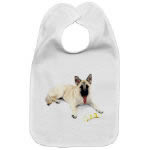
Sammie's Meal Time Bib now available! |
|
| Try the ASPCA's "Is
your Home Poison Safe?" Interactive Quiz on the ASPCA
web site. |
Elizabeth Riddle, our rescue president, outside
of her full-time job and continuing educational pursuits, is an animal
behaviorist and an obedience instructor, with a Bachelor's degree in
Biology from the University of Illinois with a specialty in Ethology
(the study of animal behavior). She officially founded this rescue in
November of 1997 while attending the University of Illinois. Learn
more about this rescue...
|
|
|
